




CRA Enforcement Actions
Urgent help with CRA enforcement actions, including garnishments, bank freezes, liens, and requirements to pay.
Stop Bank Freezes, Wage Garnishments, and Tax Liens Before It’s Too Late
If you’ve been notified of enforcement action by the Canada Revenue Agency (CRA) — such as a bank account freeze, wage garnishment, or legal warning — immediate action is required. The CRA has powerful collection tools, and once they act, reversing the damage can be difficult.
At TaxHelp.ca, we help Canadians respond quickly to CRA enforcement and protect their income, assets, and financial stability. We negotiate directly with CRA collections officers, file urgent relief applications, and set up payment plans when appropriate.
What is CRA Enforcement?
CRA enforcement refers to legal actions taken by the Canada Revenue Agency to collect unpaid taxes, penalties, or interest.
These actions do not require court approval, making them both fast and disruptive.
Common CRA enforcement tools include:
Bank account freezes (Requirement to Pay)
Wage garnishments from your employer
Property liens and certificates of judgment
Asset seizures or sheriff involvement
Director liability assessments (for corporate tax debt)
Third-party demands to customers, tenants, or business partners
CRA Collections: What Escalation Looks Like
You receive a Notice of Collection, Legal Warning Letter, or Final Letter Before Legal Action
You receive a Notice of Collection, Legal Warning Letter, or Final Letter Before Legal Action
Your bank account is frozen without notice
Your paycheque is suddenly reduced due to garnishment
You’re contacted by a CRA collections officer
You see a lien on your home or property title
Take Action Before It’s Too Late
The CRA doesn’t need a court order to act. If you ignore their notices, they will escalate, often without further warning.
We strongly recommend contacting a tax professional as soon as enforcement is threatened.
CRA Collection Power is Real but here is how we can help:
- Contacting CRA Collections Immediately
Acting as your representative, we will request:
A temporary hold on collections
A review of the debt and proposed resolution
A structured payment arrangement that suspends enforcement during negotiation
CRA Collections Agents have discretion to pause enforcement if they believe you’re cooperating in good faith. Timing matters.
- We Will File Any Outstanding Returns
CRA generally won’t negotiate on enforcement unless all required filings are up to date. Filing tax returns even without payment, can stop penalties from compounding and unlock options like:
Taxpayer relief
Payment plans
Voluntary disclosure
We Will Propose a Payment Arrangement
If you can’t pay in full, a reasonable monthly payment proposal (backed by a budget or explanation of hardship) can halt enforcement. These must be:
Realistic and consistent
Backed by full disclosure of assets/liabilities if requested
CRA’s Enforcement Authority
Unfiled Tax Returns
The CRA actively identifies individuals, corporations, and trusts who have not filed required tax returns.
The process begins with letters or phone calls requesting the outstanding returns. If these efforts are unsuccessful, CRA officers may visit the taxpayer’s home or business to obtain the returns or serve legal notices. If compliance is still not achieved, the CRA may assess taxes owing based on available information, often without including deductions the taxpayer might have claimed
Collections
If taxes, penalties, and interest remain unpaid, the CRA may take legal action to collect the debt. This can include placing liens on assets, garnishing wages or bank accounts, and seizing and selling assets. Before such actions, the CRA must certify the debt in Federal Court, making it a matter of public record
Did you know:
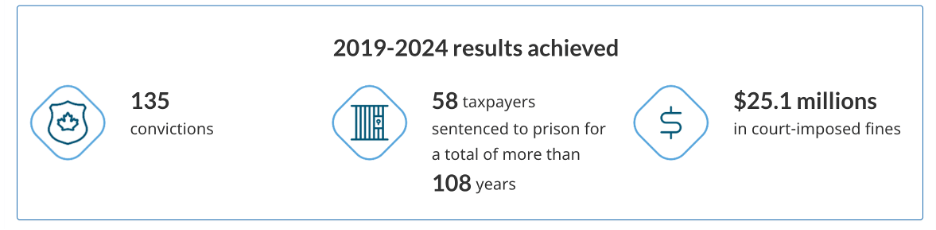
Between 2019 and 2024, the CRA obtained 135 convictions, with 58 taxpayers sentenced to prison for a total of more than 108 years, and $25.1 million in court-imposed fines (*Source: *CRA)
Stop Enforcement Action
If you’re under threat of CRA action or already facing enforcement, contact us immediately. We’ll review your situation, create a plan, and communicate with the CRA on your behalf.